THE MOTOSTUDENT
COMPETITION

The greatest international university engineering challenge on two wheels.
The Origin of the Challenge

Born in the 2009-2010 season in Aragón, Spain, MotoStudent has consolidated itself as the most prestigious university motorcycling competition worldwide. It is a biannual challenge where teams from all over the planet design, develop, and manufacture a real racing prototype. In the latest edition (VIII, October 2025), over 86 teams from 20 countries and more than 1,000 students participated.

The competition is organized and promoted by the Moto Engineering Foundation (MEF). This non-profit entity is based at the TechnoPark MotorLand technology park in Alcañiz.

The main objective of the MEF is to strengthen ties between the academic world and the motor industry fabric. For students, MotoStudent is not just a university project; it is the first real immersion into the rigor, stress, and innovation of the high-competition motorsport industry.

Learn more at motostudent.com
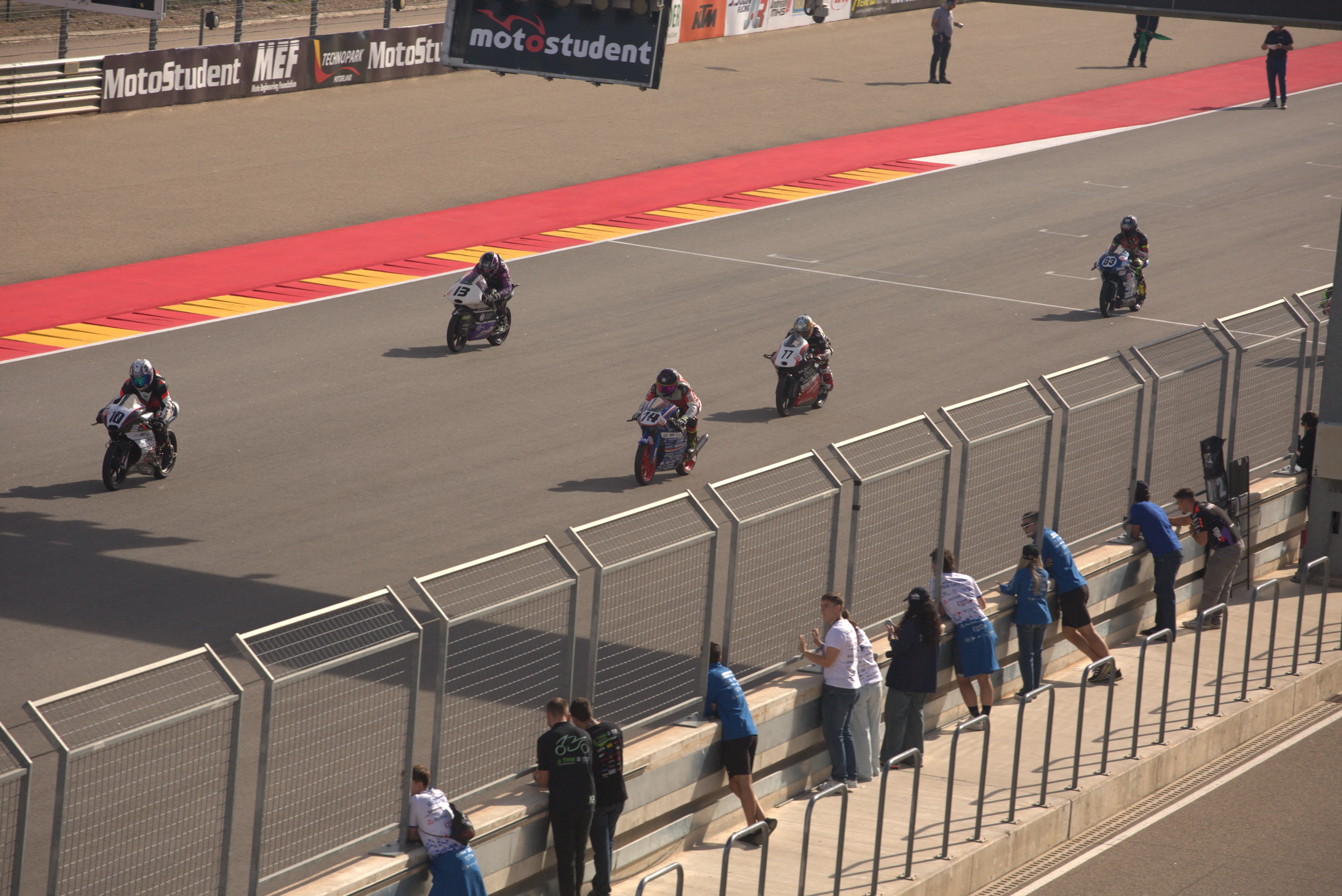
MotoStudent starting grid

The Two Categories

The competition evolves, offering two paths to elite engineering.
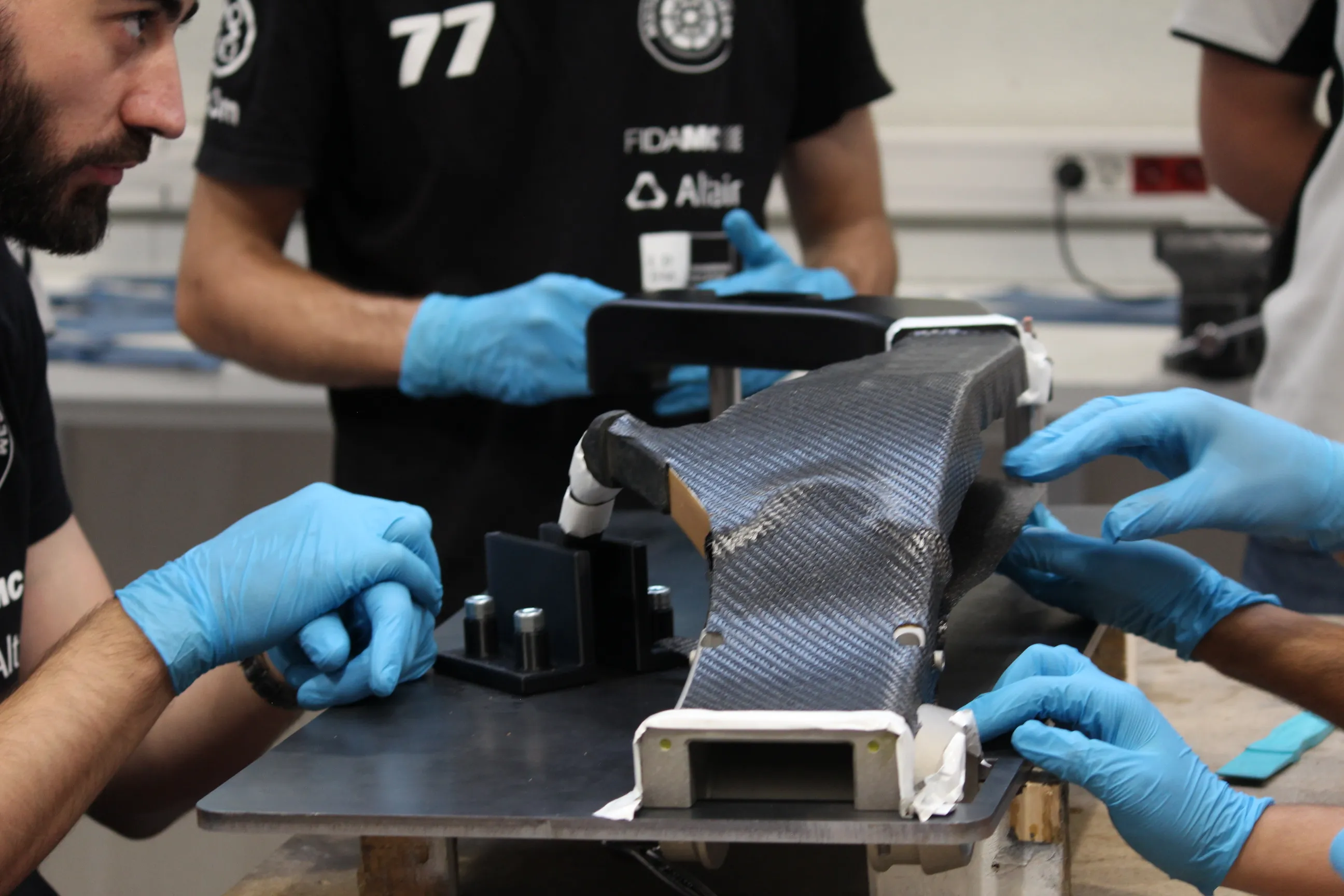
Workshop work Petrol category

MotoStudent EFuel

Our premier class. Combustion powered by 100% renewable fuel.

Originally known as Petrol, this category was rebranded as EFuel starting from the VIII edition (2024/2025), reflecting the competition's commitment to sustainability through the use of synthetic and renewable fuels. Prototypes are developed around a 250cc 4-stroke internal combustion engine, inspired by the regulations of the Moto3 world championship.

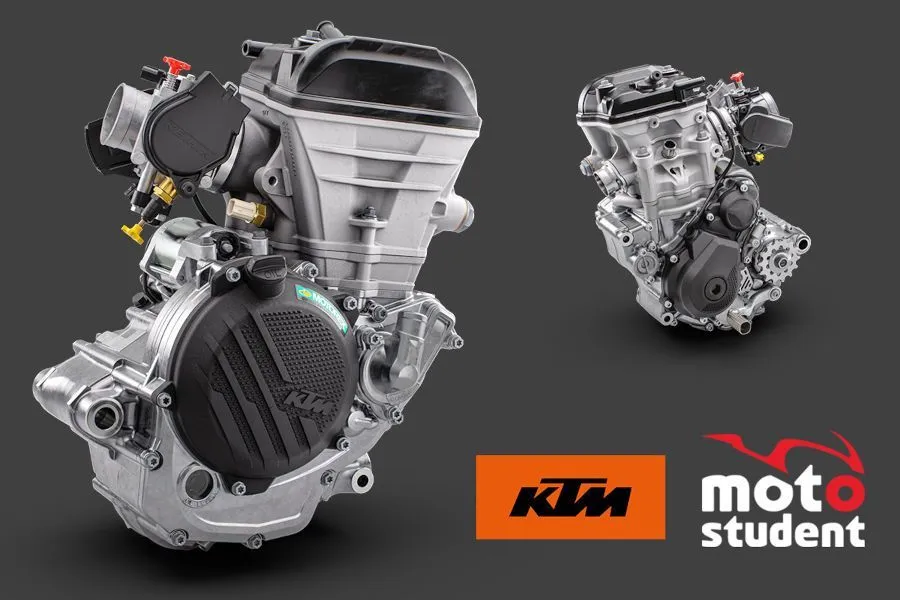
In the latest edition (VIII MotoStudent, October 2025), the Basic Kit supplied by the organization included the KTM 250 SX-F engine, rims, and braking system. The rules are strict: it is completely forbidden to structurally alter the crankcase or the mounting points of this engine.

The real engineering challenge: The entire design relies on the manufacture of the chassis, swingarm, subframe, complete aerodynamics, telemetry, and intake/exhaust systems. Historically, this is where MotoMaqLab squeezes thermodynamics to the maximum, managing to extract every horsepower through injection map optimization and mechanical design of the highest precision.

MotoStudent Electric

Introduced in 2016 in response to the sustainable mobility revolution in the motor industry, this category challenges students to manufacture 100% electric prototypes.

The organization supplies an electric motor (typically a permanent magnet synchronous motor) and an Insulation Monitoring Device (IMD) for safety reasons. However, the engineering challenge here is monumental: teams must design, size, and assemble their own high-voltage battery packs and their thermal and electronic management systems (BMS).

The Electric category requires future engineers to master not only motorcycle dynamics but also energy flow, inverter programming, and the extreme safety demanded by high-competition electrical systems.

MotoStudent Electric prototypes
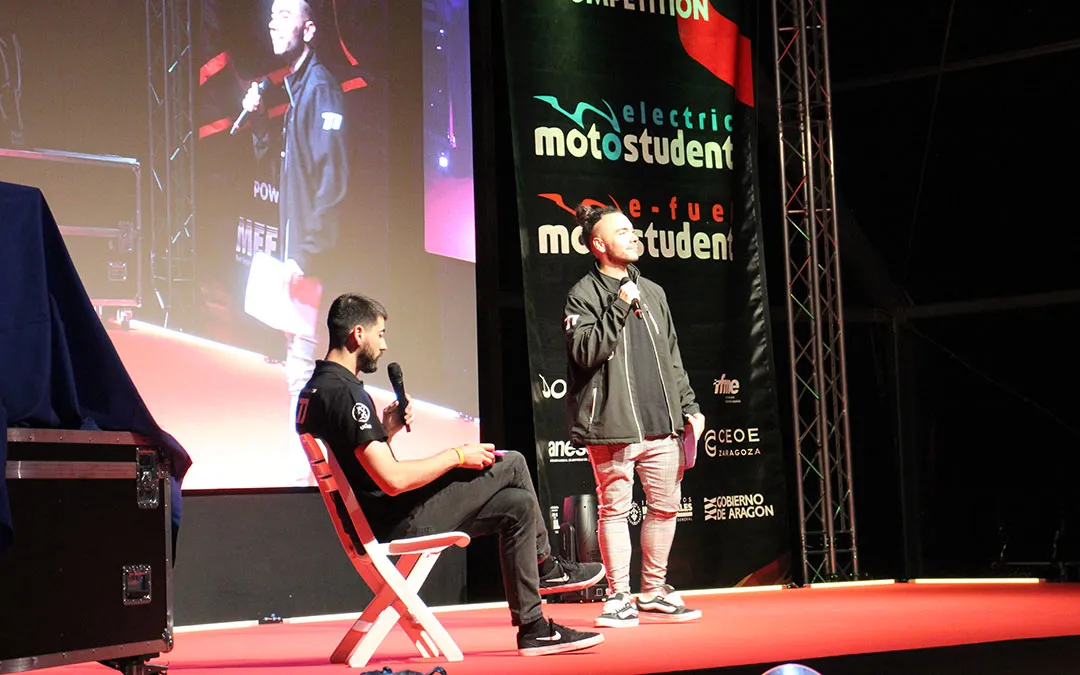
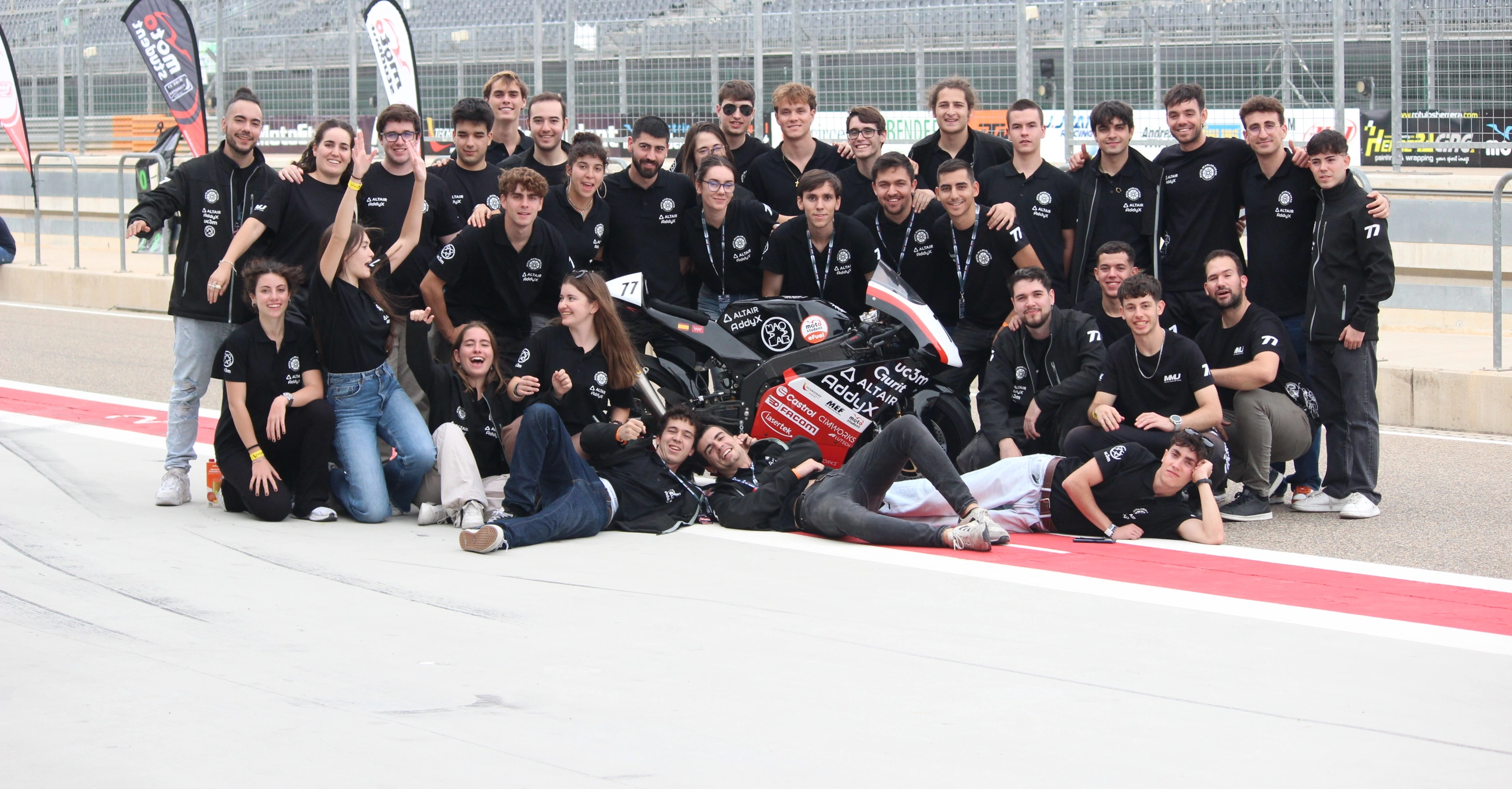
The entire MotoMaqLab team on the MS1 stage

MS1 Phase: The Industrial Project

MotoStudent forces teams to behave like real automotive companies. In the MS1 Phase (500 points), the competition evaluates the project from a purely technical and business viability perspective. The bikes haven't hit the asphalt yet.

  • Concept Development (50 pts): Definition of the prototype concept, design requirements, and performance targets.
  • Technological Innovation (100 pts): Risk and creativity are scored. Teams must present unprecedented solutions in aerodynamics, suspensions, or the use of new materials (3D printing, carbon fiber).
  • CAD Design and Development (75 pts): Complete virtual validation of the prototype before its physical manufacturing, demonstrating FEA (Finite Element Analysis) and CFD (Computational Fluid Dynamics) studies.
  • Prototyping & Testing (75 pts): Prototype manufacturing and experimental validation tests prior to competition.
  • Economic Plan and Viability (100 pts): Present a realistic business plan to manufacture a serial run of 500 units/year of the motorcycle (~€4,500/unit), justifying the costs of materials and processes.
  • Pitch Presentation (60 pts): A commercial exhibition in "startup" format in front of an expert industry jury, convincing potential investors.
  • MS1 Finals (40 pts): Final defense of the project before the competition's technical jury.

MS2 Phase: Dynamic Tests and Race

After months of work in the workshop, the teams travel with their manufactured prototype to the grand finale: The FIM MotorLand Aragón Circuit. Here, the motorcycle faces the real world in the MS2 Phase.

  • Scrutineering (Technical Inspections): FIM engineers and judges examine the motorcycle millimeter by millimeter to ensure it strictly complies with the regulations and is safe to compete. If scrutineering is not passed, you don't race.
  • Braking Test: Evaluates the capacity of the braking system to stop the motorcycle in the shortest possible distance from a defined speed.
  • Acceleration Test & Vmax: Timed tests on the straight to measure power and transmission efficiency.
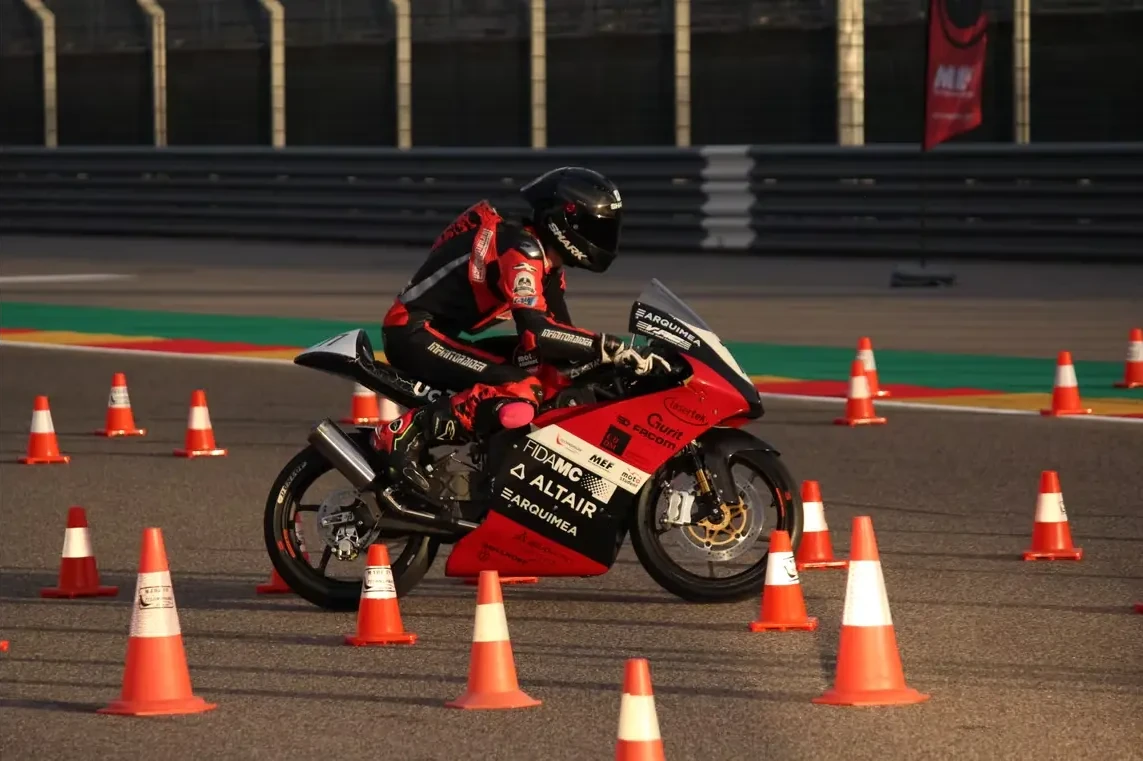
  • Gymkhana: A tight cone circuit that tests the chassis geometry, agility, and the rider's handling.
  • The Final Race: The climax of the event. An official grid speed race against all qualified teams. Here, reliability, thermal strategy, fuel consumption, and the rider's skills count.
Dynamic tests at MotorLand

Join the Challenge

Do you want to know how we apply this methodology in our own team at the University Carlos III of Madrid?

Meet MotoMaqLab